
I am a firm believer that there is a solution for every problem. Gender equality is the acknowledgment that men and women are equal in every aspect of society. For many centuries, men have been the dominant gender and women have been the minority. Women barely had any rights since men were the dominant gender. Fortunately, over a period of time, things have slowly changed. However, this issue still remains mortifying for a lot of women. Gender inequality is the unequal and biased treatment between a man and a woman. There are many solutions for this approach. The first one would be pointing it out. The media itself has many negative gender stereotypes which can have an impact on youth. At times, these stereotypes can be difficult for some to recognize unless it is pointed out in some way. Be that person! You can be the person who talks about gender inequality and stereotypes with your family and friends in order to bring awareness of this issue. Change their mind. Be open-minded. Another solution would be by being a living example. Be a good example or a good role model for your loved ones and respect anyone regardless of their sexual orientation, gender, etc. Make a sheltered space for individuals to communicate and their actual characteristics paying little heed to what society’s sexual orientation generalizations and desires are. A different solution would also be to speak up when someone is making a sexist joke. Put them in their place and let them know that what they are doing is inappropriate and hurtful. Let them know that many teenagers take away their life because of this particular issue. A speech could be seen as a solution in my opinion since more people are willing to listen and acknowledge this issue and they are able to take into consideration that gender inequality should not be as bad as before. On the other hand, solution such as being a good parent at home could benefit your child’s well being. If you are a parent, be capable of expressing healthy emotions onto your child. Consider how you express your sentiments such as pity, sadness, disappointment, frustration, etc. Men are socially adapted to timid far from feelings. As a parent, this is your chance to demonstrate help and be a good role model of solid feelings to your child/children. Also, encourage self-expression. Stereotypical gender norms limit how men convey what needs be from multiple points of view. This is fortified through self-policing, media, peers, and so forth. Help young men, especially your son, comprehend that it is alright to settle on decisions and take on any behaviours regardless of any gender. It is OK to cry. It is OK to feel. It is OK to be sad. It is OK to be emotional.
Author: sarinebenohanian
Hello friends! Just an average 21 year old aspiring to change the world... one blog at a time :)
Living in Montreal. Full-time student at Lasalle College. Studying social sciences.

Gender Pay Gap
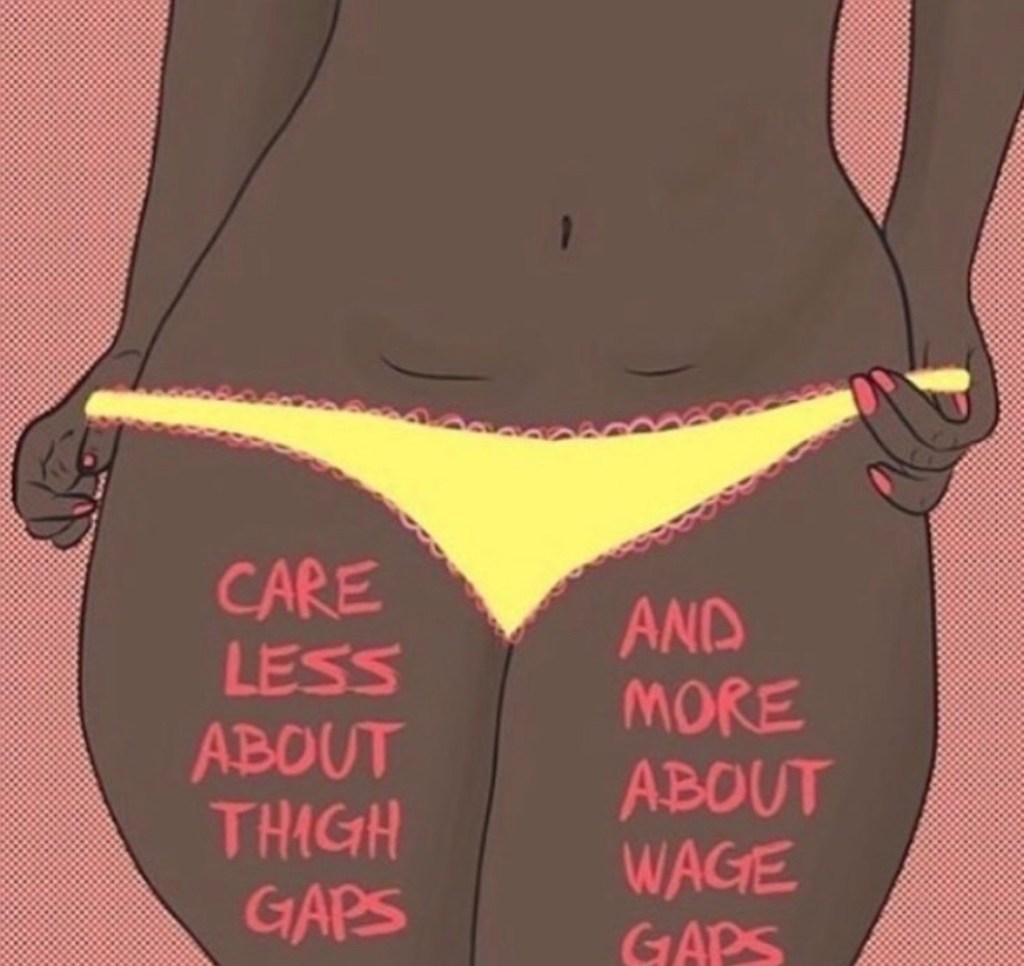
When it comes to gender differences, the issue is that there is a significant salary difference and this raises many concerns throughout the world. When scientists and researchers speak of the gender gap these days, they are usually referring to systematic differences in the outcomes that men and women achieve in the labor market. For starters, a lot of women are put under pressure when it comes to their career. Many men consider a woman’s career as a conflict because it is stereotypically said that women are caretakers and men are breadwinners. For instance, a man’s power and influence concerning his career might have a risk of deteriorating the marital relation. Hence, women are generally put down due to that. No healthy marriage should be as if it were a competition. Although, these traditional roles are slowly evolving because society’s recognizing this issue we are currently dealing with. Society has seen the changing in the trends of men’s and women’s attitudes and actions over the past decade. Even though women receive less money than men, women are starting to step outside the box in order to stand their ground. According to the Gender Pay Gap Ratios, Stats and Infographics, “women still make only $0.79 for every dollar men make in 2019”. The uncontrolled wage gap represents how stereotypes really get in the way of careers. For instance, women are not capable of demanding jobs just like men can handle them. It is not about gender, it is about strength and integrity. As stated in the website, “There are structural barriers which keep women from advancing in the workplace– this is what we call the opportunity gap”. Women do not have the opportunity to go forward in what they want to achieve. If a woman wants to pursue in her dreams, difficulty comes along.

Also, this study has found that most men and women start their career as an individual contributor. However, a small percentage of women reach manager or supervisor level by the middle of their career. To give an example, “By mid career (age range 30-44), 47 percent of men are managers or higher, while only 40 percent of women reach this level. By late career (age 45+), 57 percent of men are managers or higher, while only 41 percent of women reach this level. Few women ever make their way to C-suite. By late career (age 45+), eight percent of men have risen to an executive level position, compared to three percent of women.” Factors such as economic, cultural, and historical influence the gender wage gap.
How perceptions of gender roles affect mental health
To state the obvious, dealing with a mental disorder is not easy. At times, or even most times, you might lose your self-control. You begin to wonder who you are, what you truly admire, or what your passions are in life. This poisonous disease manipulates you into thinking you are worthless. You start wondering if this is who you are or your disease. Society is so quick to characterize these oppressing feelings as violent. Mental illness feels like a crushing stone in one’s chest making it hard to breathe. Besides all this, there’s a deeper distinction when it comes to gender roles and mental health. In a society, gender roles is how we’re expected to act, speak, dress, and conduct ourselves based upon our assigned sex. You have probably heard it all. “If you’re a man struggling with a mental illness, you’re a sissy.” “If you’re a woman struggling with a mental illness, it’s normal, you’re a woman.” What does that mean? What does it mean being a woman and struggling with mental illness?
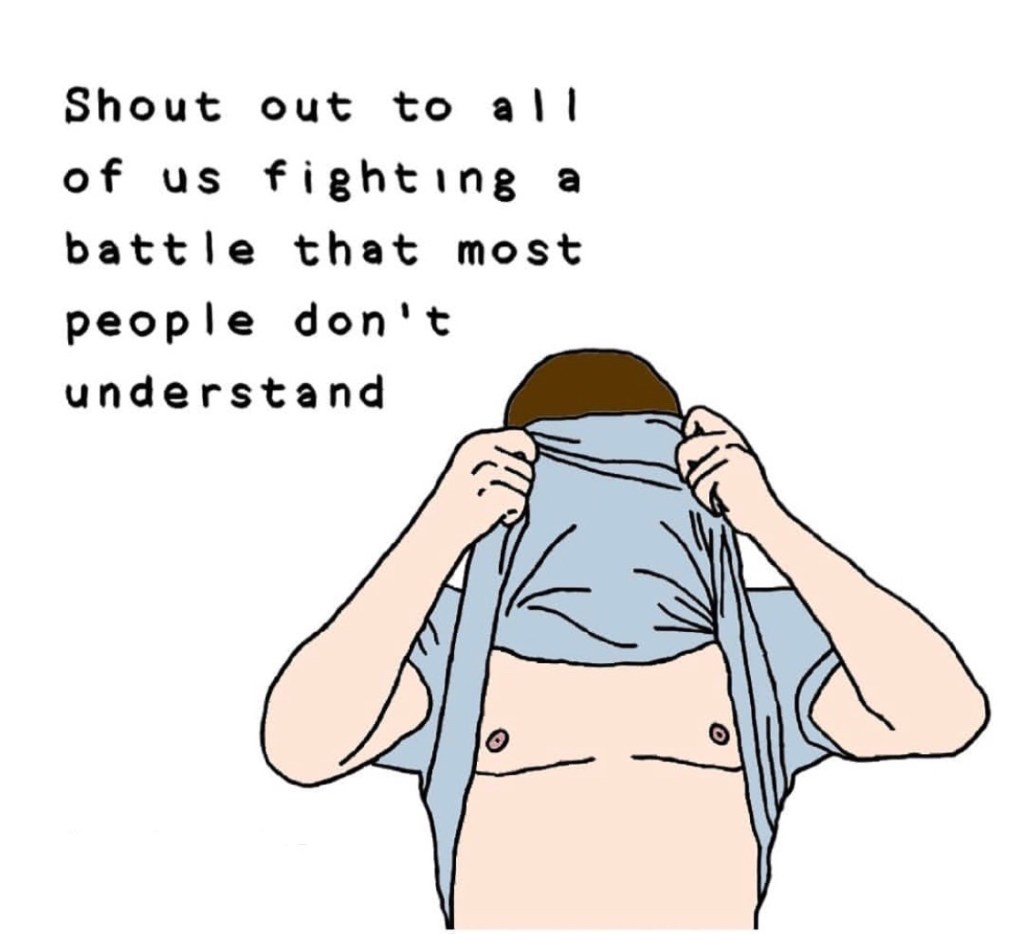
Women are taught to be lady-like, proper, and sensitive when it comes down to expressing their emotions. On the other hand, men are taught to be strong, collected, and to suck it up. Stereotypes ruined our society. Social learning theory, which is also known as repeated behaviour, comes from a child’s parents. Parents teach their children what to be, how to act, and what to like. It’s awful. Families are usually the primary source of socialization and greatly impact gender role socialization. The bottom line is, men and women are equally allowed to feel emotions. These expectations by society are not realistic. Men that stay inside the box are generally safe from the harassment that occurs outside the box. Men who leave the box are accuse of being “women” or “gay.” The moment they are accused of being outside the box, they could retaliate in an aggressive fashion and then put themselves back into the box. Women who stay inside the box are not “safe” as promised but are raped or abused as often as women outside the box. The only benefit that they may be believed by society more often than women outside the box. Going back to social learning, there is a question that sex role behaviour is portrayed as highly stereotypical manner in all forms of the media such as television, movies, magazines, books, video games, and so on. I really believe that young boys and men need better access to mental health care. Mental health has become a huge crisis in our modernized world, and boys are not getting enough attention because of the social learning theory. Since men are taught to be strong, they are less likely to talk about their emotions. This results to men not being able to expressively open up and speak out about what is bothering them. We need to find a way to stop the stereotypical bashing amongst people, especially men.
Stereotypical Gender Roles

Before jumping in stereotypical gender roles, we must acknowledge that gender roles or gender norms is a social construct. Someone’s gender identity can be recognized by how they act as a male or a female. When it comes to mind sets, perceptions, views, or opinions, women and men differ from each other and it is quite fascinating. On the other hand, biological differences does not define anybody, even though a man and a woman have different physical parts, individuals primarily focus about their gender identity through their experiences and choices throughout their childhoods to until they mature. Yes, in fact, there are numerous biological differences in both men and women, but it does not have an impact on how gender shapes in people’s lives. Additionally, stereotypes also come from the media. May it be in newspapers, magazines, radio, television, or the Internet, people are constantly subjugated to the measurable influences these outlets have to offer. With time, these agendas intermingle with the common cultural norms, somewhat modifying them to fit a more modernized, media-influenced value system. With this being said, the media promotes it’s own core value system on our culture and behaviours. Thus, our culture’s prevailing ideologies are being socialized and normalized. For example, young children are taught through socialization, how to interact and adapt to a specific environment. From the very beginning of childhood, a girl learns that she should always be “lady-like” and pink should be her favourite colour. On the other hand, a boy will be presented with a basketball or toy cars, objects that are often associated with masculinity. Thus, boys are taught to express themselves through stereotypical masculine action such as standing his ground whereas girls must remain properly composed in all types of scenarios. According to “The Children’s Society” by Lucy, being physically appealing is a distinct characteristic for both boys and girls. It is said, “For girls, this is particularly notable at a huge 44%, with ‘being caring’ the next most common at 30%”. On the other hand, “When it comes to boys, ‘being good-looking’ gained 32% of selections, with ‘being funny’ a close second at 23%”. It seems that girls are pressured from a young age. Stereotypes affect individuals on a daily basis. Gender should not define us the way it has historically, and individuals should not feel pressured to conform to traditional gender roles or behaviours. Stereotypically, men are allowed to wear whatever pleases them and look splendid. However, women have to have clothing suitable for any occasion and not be judged by society. For instance, girls always need to be “clean-looking”. They need to be shaved on every inch of their body, they need to be moisturized, makeup done, hair done, etc. As a woman, all these requirements are unnecessary because I am not put on this earth to please anybody.

The gender stereotypes and overall stereotyping continues to not only shape but also influence the behaviour of all people regardless of the environmental setup. Some common gender stereotypes for women are: thin, fashionable, sexually objectified, caretaker, catty, dramatic, over-emotional, etc. Some common gender stereotypes for men are: buff, toned body, “sissy” if they show any type of emotion, reckless, dominant, powerful, cocky, etc. All these gender stereotypes are constructed and are not ideal. Gendered behaviours can include gender-specific clothing, speech, movement, activities, thoughts and feelings, and those norms may vary according to place, time and culture. Gender roles are relational and become more pronounced in the comparison of gender role successes and failures.
History of Gender Roles

For many years, people have used the terms gender and sex interchangeably, referring to an individual’s biological appearance, detailed features, as well as physiology. In our modernized society, gender roles play a major role and have throughout history. The notions of having two genders which are male and female is still relevant today. Lately, there have been various individuals who decided to raise awareness on the issue, as well as educate others on the difference between the two distinct terminologies. Due to the shift of gender norms, there have been many advantages and benefits such as a change in how women are perceived and what are expected of them in the society, a major change in how men are viewed and the expected roles attached to them. Finally, an awareness on individuals who do not fit in the dominant binaries. The word gender which is recognized from sex, which refers to a male or a female biologically. Those are the determined characteristics including the reproductive organs and chromosomes. On the other hand, gender is psychological and a noticeable behaviour that is not tied to biology, but instead originates from the perception you want to be seen as (Cohen, Valerie, 2018). It is how we act and feel. For instance, a person can be born a male and feel as if they are a woman. Your biological self should not define who you truly are because to each his own. We are allowed to be whoever we want and we are allowed to feel whatever we feel. The terms gender or gender roles are a social construct because it is one’s personal, social, and legal status as a man or a woman. Why should anybody be comfortable enough to make that huge of a decision for somebody else? Although, if we look at this discussion prehistorically, men hunted and gathered, and women stayed home in order to provide for their children, as well as nurture them. For instance, fertility symbols such as the Venus of Willendorf suggested that women with large stomachs, breasts, and hips were coveted for these signs of fertility.

As the population became sedentary, phallic symbols of fertility increased and people became aware of the male reproductive power; patriarchy (Cohen, Valerie, 2018). The largeness of the woman makes her appear very desirable at the time because of the environment. As mentioned, gender is a social construct. Gender expression is how you express yourself. Gender identity is someone who is either cisgender, transgender, non-binary, androgyny, etc. Lastly, sexual orientation is who you are attracted to, according to the Kinsey Scale. Now that we have taken gender roles way back, people have discovered a social learning theory which could also be known as “Modeling”. Social learning theory is learning from one another and experiences which leads to repetitive behaviour. For instance, children will have repetitive behaviour from their parents since they were taught to be, feel, or act a certain way. These expectations by society are not realistic. It is safe to say that gender roles play a part in perpetuating inequality in many ways.
 Gender Roles