

For many years, people have used the terms gender and sex interchangeably, referring to an individual’s biological appearance, detailed features, as well as physiology. In our modernized society, gender roles play a major role and have throughout history. The notions of having two genders which are male and female is still relevant today. Lately, there have been various individuals who decided to raise awareness on the issue, as well as educate others on the difference between the two distinct terminologies. Due to the shift of gender norms, there have been many advantages and benefits such as a change in how women are perceived and what are expected of them in the society, a major change in how men are viewed and the expected roles attached to them. Finally, an awareness on individuals who do not fit in the dominant binaries. The word gender which is recognized from sex, which refers to a male or a female biologically. Those are the determined characteristics including the reproductive organs and chromosomes. On the other hand, gender is psychological and a noticeable behaviour that is not tied to biology, but instead originates from the perception you want to be seen as (Cohen, Valerie, 2018). It is how we act and feel. For instance, a person can be born a male and feel as if they are a woman. Your biological self should not define who you truly are because to each his own. We are allowed to be whoever we want and we are allowed to feel whatever we feel. The terms gender or gender roles are a social construct because it is one’s personal, social, and legal status as a man or a woman. Why should anybody be comfortable enough to make that huge of a decision for somebody else? Although, if we look at this discussion prehistorically, men hunted and gathered, and women stayed home in order to provide for their children, as well as nurture them. For instance, fertility symbols such as the Venus of Willendorf suggested that women with large stomachs, breasts, and hips were coveted for these signs of fertility.
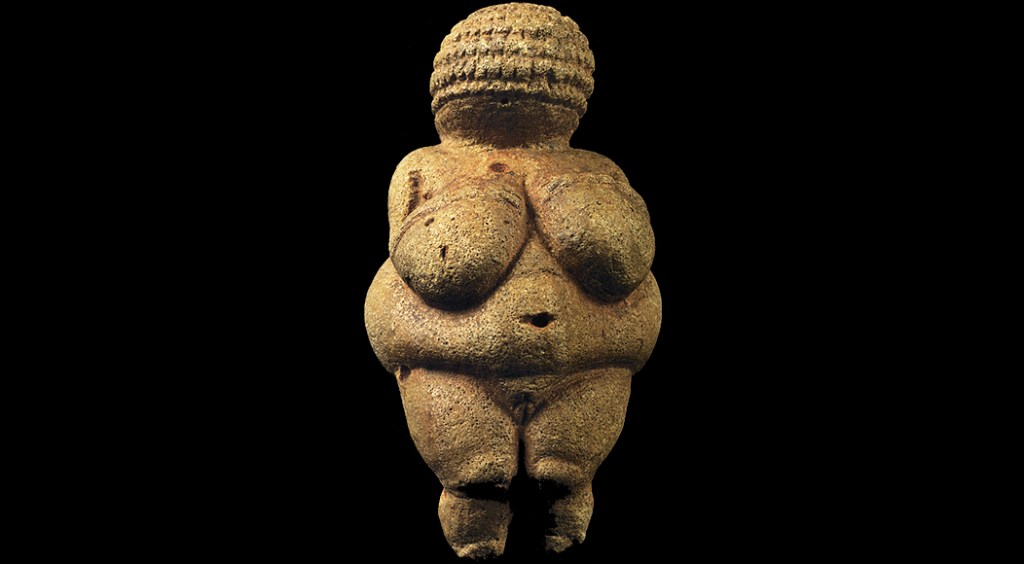
As the population became sedentary, phallic symbols of fertility increased and people became aware of the male reproductive power; patriarchy (Cohen, Valerie, 2018). The largeness of the woman makes her appear very desirable at the time because of the environment. As mentioned, gender is a social construct. Gender expression is how you express yourself. Gender identity is someone who is either cisgender, transgender, non-binary, androgyny, etc. Lastly, sexual orientation is who you are attracted to, according to the Kinsey Scale. Now that we have taken gender roles way back, people have discovered a social learning theory which could also be known as “Modeling”. Social learning theory is learning from one another and experiences which leads to repetitive behaviour. For instance, children will have repetitive behaviour from their parents since they were taught to be, feel, or act a certain way. These expectations by society are not realistic. It is safe to say that gender roles play a part in perpetuating inequality in many ways.
 Gender Roles